flashcards · 14 min read
How to Use Flashcards for Studying: Types, Apps & Methods
Learn proven techniques for using flashcards effectively across subjects. Compare Quizlet, Anki, and AI-powered options to maximize retention and study smarter.
Published October 24th, 2026 · Study Slay team
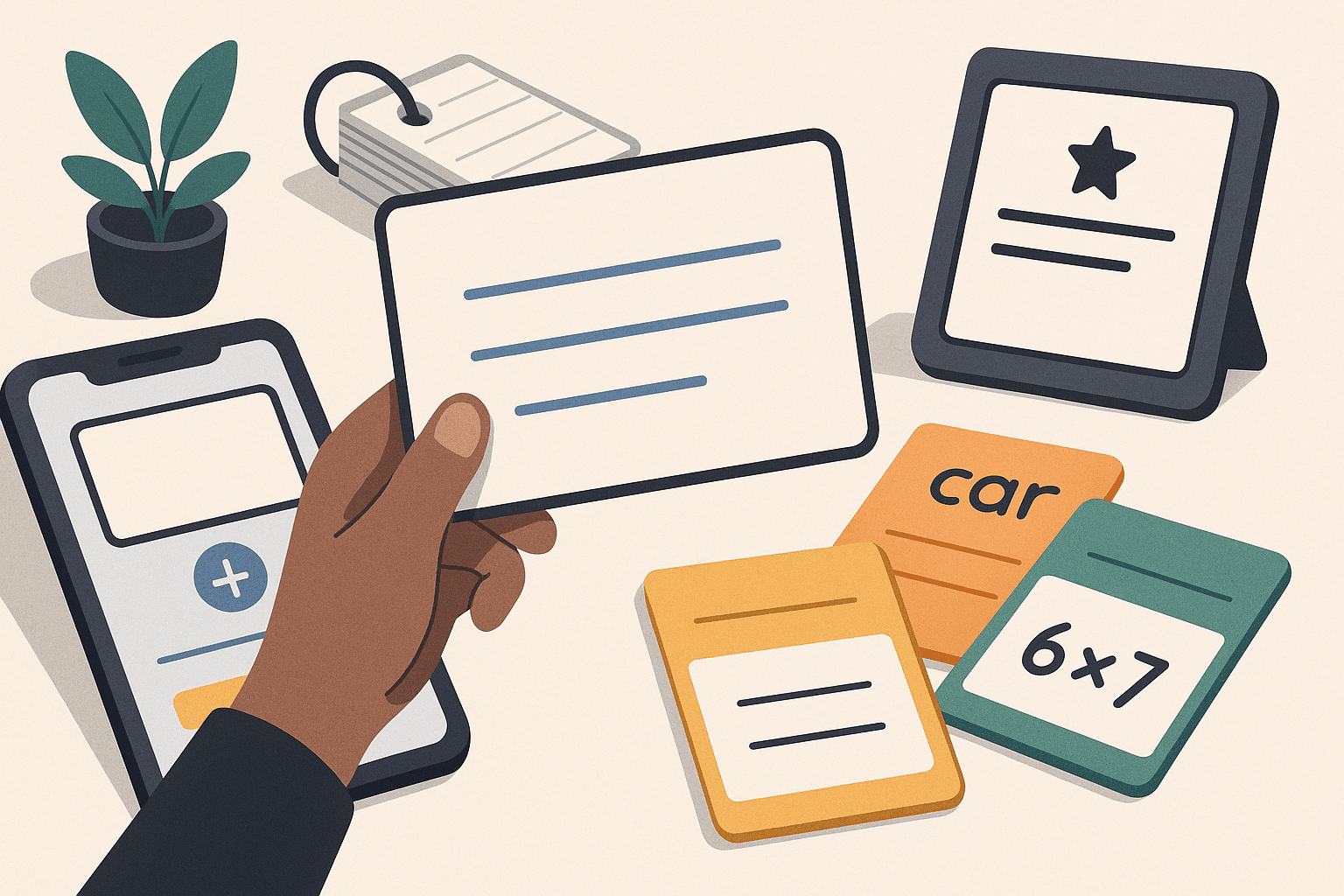
Flashcards transform passive reading into active recall, forcing your brain to retrieve information rather than simply recognize it. This tactical guide walks you through choosing the right flashcard format, building effective cards, and applying proven study methods that work across subjects from sight words to anatomy.
What Makes Flashcards for Studying So Effective?
Flashcards work because they exploit retrieval practice, a learning technique where the act of recalling information strengthens memory pathways more effectively than rereading. When you flip a card and force yourself to remember the answer, you're building durable long-term retention instead of creating the illusion of familiarity that comes from passive review.
The portability and modularity of flashcards let you study anywhere and break large topics into manageable chunks. Whether you're drilling multiplication facts flashcards during a commute or reviewing retrieval practice techniques before an exam, the format adapts to your schedule and learning pace.
Which Type of Flashcard Should You Use?
Choosing between physical and digital flashcards depends on your study environment, subject matter, and whether you need features like spaced repetition algorithms. Each format offers distinct advantages that align with different learning contexts.
Physical Paper Flashcards
Paper flashcards give you complete control over card design and eliminate digital distractions during study sessions. The act of writing cards by hand engages motor memory, which can strengthen initial encoding for some learners, especially when studying sight word flashcards or basic vocabulary where the physical act of writing reinforces spelling patterns.
The downside is manual tracking: you must shuffle, sort, and organize cards yourself, and there's no automated spacing algorithm to tell you which cards need review today. Physical cards also lack multimedia options, making them less ideal for subjects that benefit from audio or image cues.
Digital Flashcard Apps
Digital flashcard platforms automate scheduling, track your performance across every card, and sync your decks across devices so you can study on your phone, tablet, or laptop. Most apps support images, audio clips, and formatting options that make complex subjects like anatomy or foreign language pronunciation easier to master.
The trade-off is a steeper learning curve for advanced features and the temptation to download pre-made decks instead of creating your own, which skips the encoding benefit that comes from writing cards yourself.
How Do You Create High-Quality Flashcards?
Effective flashcards isolate a single concept per card, use question formats that demand retrieval rather than recognition, and include enough context to avoid ambiguity without turning the card into a paragraph. The goal is to create a card you can answer in five seconds or less once you know the material.
The One-Concept-Per-Card Rule
Each flashcard should test exactly one piece of information so you can identify weak spots precisely and avoid partial credit. Instead of writing "Describe the water cycle," break it into separate cards: "What is evaporation?" and "What drives condensation?" and "Where does precipitation occur in the water cycle?" This granularity lets you drill only the steps you struggle with instead of reviewing the entire process every time.
For multiplication table flashcards, this means one fact per card (7 × 8 = ?) rather than an entire row of the table on a single card. The specificity accelerates mastery because you practice retrieval for each fact independently.
Write Questions That Force Recall, Not Recognition
Phrase the front of your card as a direct question or fill-in-the-blank prompt that requires you to generate the answer from memory, not simply recognize it from a list. Recognition is easier than recall and doesn't build the same retrieval strength, so avoid true/false or multiple-choice formats unless you're specifically preparing for an exam that uses them.
For example, "The mitochondria is the _____ of the cell" is weaker than "What organelle produces ATP through cellular respiration?" The second version demands that you retrieve both the function and the name, strengthening the connection between the two.
Add Context to Avoid Ambiguity
Include just enough context on the front of the card to make the question unambiguous, especially when the same term appears in multiple contexts. If you're studying "capital," specify whether you mean financial capital, a capital city, or capital letters. A card that reads "Define capital (economics)" is clearer than one that simply says "Define capital," saving you confusion during review.
| Flashcard Element | Effective Example | Ineffective Example |
|---|---|---|
| Granularity | What year did World War I begin? | Describe the causes and timeline of World War I. |
| Question Type | Name the three branches of U.S. government. | True or false: The U.S. has three branches of government. |
| Context | What is the derivative of x² (calculus)? | What is the derivative of x²? |
| Answer Length | Photosynthesis | Photosynthesis is the process by which green plants and some other organisms use sunlight to synthesize foods with the aid of chlorophyll, converting carbon dioxide and water into glucose and oxygen. |
What Are the Best Flashcard Apps and Platforms?
The right platform depends on whether you prioritize ease of use, advanced customization, or AI-powered automation that generates cards from your existing notes and lectures. Each major app serves a different type of learner.
Quizlet Flashcards: Best for Beginners and Shared Decks
Quizlet flashcards offer the simplest interface and the largest library of pre-made decks, making it ideal if you're new to digital flashcards or want to quickly find sets for common subjects. The platform includes games and match modes that add variety to review sessions, which can help maintain motivation during long study blocks.
The limitation is that Quizlet's free spaced repetition feature is less sophisticated than dedicated algorithms, so you'll need to manually identify which cards need more practice or upgrade to a paid plan for better scheduling.
Anki Flashcards, AnkiApp Flashcards, and AnkiDroid Flashcards: Best for Advanced Users
Anki flashcards run on a highly customizable spaced repetition algorithm that schedules reviews based on how well you remember each card, optimizing long-term retention with minimal daily review time. AnkiDroid flashcards is the free Android version, while AnkiApp flashcards is a separate, simplified app often confused with the official Anki ecosystem.
Anki's steep learning curve and dated interface can frustrate beginners, but the platform's flexibility makes it the top choice for medical students, language learners, and anyone committing to years of cumulative study. The investment in learning Anki's system pays off when you're managing thousands of cards across multiple subjects.
AI-Powered Flashcard Generators: Best for Speed and Automation
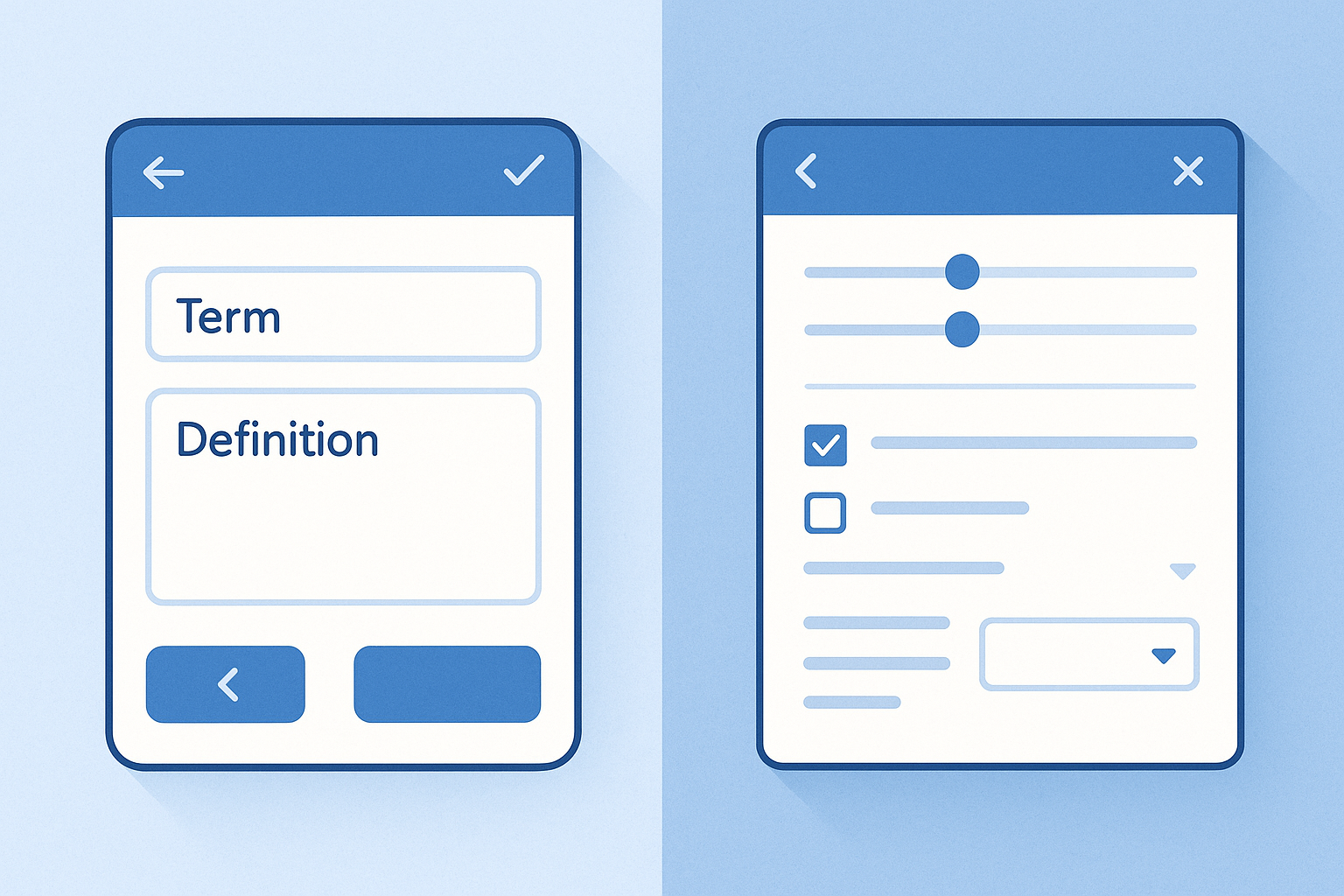
Platforms like Study Slay automatically generate flashcards from your lecture recordings, PDFs, and notes, eliminating the manual card-creation step while still giving you the retrieval benefits of flashcard study. This approach works especially well when you're working from dense textbook chapters or long lecture transcripts where writing every card by hand would take hours.
The trade-off is less control over card phrasing and granularity compared to handwritten decks, though most AI tools let you edit generated cards to refine questions or adjust difficulty. For students juggling multiple courses, the time saved often outweighs the slight loss of encoding benefit from manual creation, especially when combined with AI flashcard tools that adapt to your study patterns.
How Should You Study With Flashcards?
The method you use to review flashcards matters as much as the cards themselves, with spaced repetition and active self-testing delivering far better retention than cramming or passive flipping through a deck once.
Apply Spaced Repetition to Maximize Retention
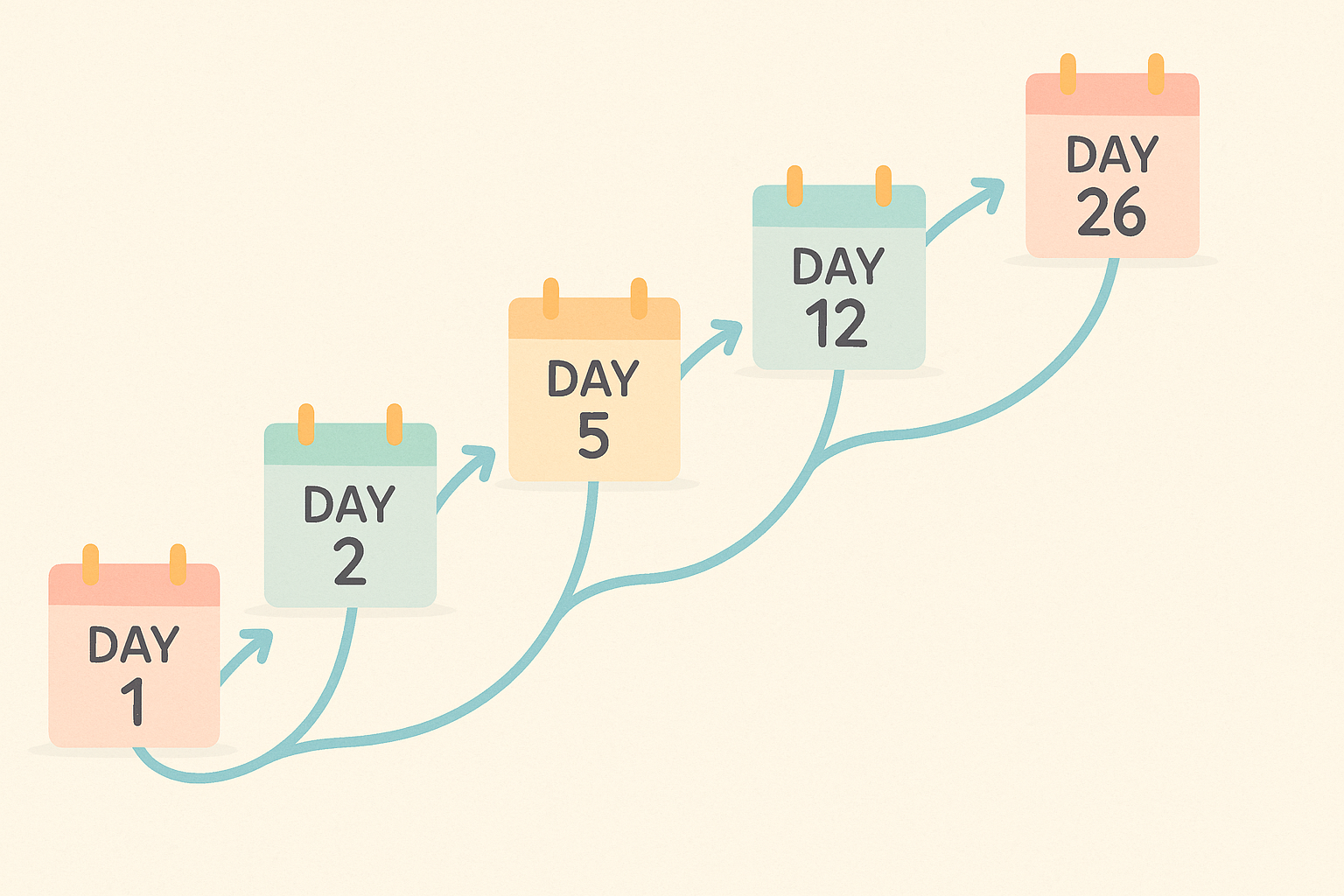
Spaced repetition schedules reviews at increasing intervals, showing you a card soon after you first learn it, then again a day later, then three days later, then a week later, and so on. This pattern exploits the spacing effect, where information reviewed just before you're about to forget it creates stronger memory traces than massed practice.
If you're using physical cards, manually sort them into three piles after each review: "know well" (review in one week), "somewhat know" (review in three days), and "don't know" (review tomorrow). Digital apps automate this process, but the principle is the same. For a deeper dive into the science behind this technique, review how the spacing effect works.
Force Yourself to Answer Out Loud or in Writing
Silently thinking the answer without verbalizing or writing it lets you get away with partial retrieval or vague recognition, weakening the practice effect. Say the answer out loud or jot it down on scrap paper before flipping the card, then compare your response to the back.
This habit is especially critical for subjects where close-but-not-exact answers matter, like foreign language verb conjugations or chemical formulas. The act of producing the full answer reveals gaps that silent review would let you gloss over.
Shuffle Your Deck to Prevent Order-Based Recall
Studying flashcards in the same order every time trains you to remember the sequence rather than the content, a phenomenon called serial position effect. Shuffle your deck before each session so you can't predict the next card based on the previous one.
Most digital apps shuffle automatically, but if you're using paper cards, take five seconds to mix them thoroughly. This small step ensures you're testing genuine recall instead of pattern recognition.
How Do You Use Flashcards for Different Subjects?
Flashcard strategy varies by subject because different disciplines reward different types of retrieval, from rote memorization to conceptual application. Tailoring your card design to the subject's demands improves both efficiency and retention.
Using Sight Word Flashcards for Early Literacy
Sight word flashcards drill high-frequency words that don't follow standard phonics rules, requiring recognition rather than decoding. Show the word on the front and ask the learner to read it aloud, then use the word in a sentence on the back to reinforce meaning and context.
Keep sessions short (five to ten minutes) to match young learners' attention spans, and introduce only three to five new words per session while reviewing previously learned words. Consistent daily practice with a small set builds automaticity faster than infrequent long sessions.
Using Multiplication Facts Flashcards and Times Tables
Multiplication facts flashcards turn arithmetic into automaticity, freeing working memory for higher-level math. Write the problem (6 × 7) on the front and the answer (42) on the back, drilling facts until retrieval is instant and effortless.
Focus on the hardest facts (typically 6–9 times tables) rather than spending equal time on easier ones like 2 × 3. Sort cards by difficulty and spend more time on the facts you miss, a strategy that accelerates mastery compared to cycling through the entire set equally.
Adapting Flashcards for Conceptual Subjects
For subjects like history or biology that demand understanding rather than rote facts, write cards that test relationships and applications, not just definitions. Instead of "Define mitosis," ask "What is the purpose of mitosis in tissue repair?" or "How does mitosis differ from meiosis in chromosome count?"
This approach forces you to retrieve the concept in context, which builds deeper understanding and transfer to exam questions that ask you to apply knowledge rather than recite it. Pair flashcards with diagrams or AI-generated study notes that map relationships between concepts for a complete study strategy.
What Mistakes Should You Avoid When Using Flashcards?
Even well-designed flashcards fail if you fall into common traps like passive recognition, over-reliance on pre-made decks, or ignoring cards you find difficult. Recognizing these pitfalls lets you adjust your approach before they undermine your retention.
Don't Just Flip Cards Without Testing Yourself
Flipping through flashcards and glancing at the answer without attempting retrieval is reading, not studying, and it builds false confidence through the familiarity illusion. Always force yourself to generate the answer before checking, even if you're certain you know it.
If you catch yourself simply recognizing answers without effort, the cards are too easy or you're reviewing too frequently. Increase the interval between reviews or rewrite the card to ask a harder variant of the same concept.
Avoid Downloading Decks Without Customization
Pre-made flashcard decks save time but skip the encoding benefit that comes from writing cards yourself, and they often include irrelevant material or phrasing that doesn't match how your instructor frames questions. Download shared decks as a starting point if needed, but always edit cards to match your course and add missing concepts from your own notes.
The ideal approach combines AI generation for speed with manual editing for personalization. Tools that let you convert lecture recordings into study materials give you a customized starting deck without hours of manual typing.
Don't Skip Difficult Cards
The cards you consistently miss are the ones you need to review most often, but they're also the most tempting to skip because they're frustrating. Resist the urge to remove hard cards from your deck or always mark them as "easy" to avoid seeing them again.
Instead, break down difficult cards into smaller sub-questions or add mnemonic hints to the card itself. If a card remains impossible after several attempts, the problem might be that it's testing too many concepts at once or lacks necessary context.
How Do You Integrate Flashcards Into a Broader Study System?
Flashcards excel at retrieval and memorization but don't replace initial learning, deep reading, or practice problems, so the most effective study systems use flashcards as one component alongside other methods. Position flashcard review after you've already encountered the material through lectures or reading, not as your first exposure to a topic.
Start by taking structured notes during lectures or while reading, then convert key concepts into flashcards within 24 hours while the material is still fresh. Review those flashcards using spaced repetition over the following weeks, and supplement with practice exams or problem sets closer to test day to ensure you can apply what you've memorized.
For dense material like textbook chapters, combine flashcards with active reading strategies that highlight key points before you create cards. This layered approach ensures you understand the material before drilling it, preventing the problem of memorizing facts without grasping their meaning.
When Should You Stop Reviewing a Flashcard?
A card is ready to retire when you can answer it instantly and correctly for several consecutive reviews spaced weeks apart, indicating the information has moved into long-term memory. Most spaced repetition apps will automatically extend intervals to months or even years for well-learned cards, effectively archiving them without deleting your progress.
If you're using physical cards, move consistently mastered cards to a separate "retired" pile that you review once a semester or before cumulative exams. This keeps your active deck lean and focused on material that still needs work, reducing daily review time while preserving long-term retention.
Frequently Asked Questions About Using Flashcards
How many flashcards should I review per day?
Most students can comfortably review 50 to 100 flashcards per day when using spaced repetition, which typically takes 15 to 30 minutes depending on card difficulty and how well you know the material. Start with a smaller daily target like 20 cards if you're new to flashcard study, then gradually increase as the habit becomes automatic.
Is it better to make my own flashcards or use pre-made decks?
Making your own flashcards forces you to process and rephrase information during card creation, which strengthens initial encoding and ensures cards match your course content exactly. Pre-made decks save time but skip this encoding benefit, so the best approach is to use AI tools or shared decks as a starting point and then edit every card to fit your needs.
Can flashcards work for subjects that aren't about memorization?
Flashcards work for any subject where you need to retrieve information quickly, including conceptual fields like philosophy or literature, as long as you design cards that test understanding and application rather than rote definitions. Ask "why" and "how" questions on your cards instead of only "what" questions to build deeper comprehension.
What should I do if I keep forgetting the same flashcard?
If a card remains difficult after multiple reviews, break it into smaller sub-cards that test one piece of the concept at a time, add a mnemonic or visual cue to the card, or check whether the question is ambiguous and needs clearer context. Persistent difficulty often signals that the card is too complex or that you need to revisit the underlying concept in your notes before drilling it further.
Start Building Smarter Flashcards Today
Flashcards become a study superpower when you combine well-designed cards, active retrieval practice, and spaced repetition scheduling. Whether you choose Quizlet flashcards for their simplicity, Anki flashcards for deep customization, or AI-powered platforms that generate cards from your existing materials, the key is consistent daily review and ruthless focus on cards you don't yet know.
Transform your lecture recordings, PDFs, and notes into ready-to-study flashcards in seconds with Study Slay's AI flashcard maker, then review them on any device using built-in spaced repetition. Stop wasting time on manual card creation and start focusing on the retrieval practice that actually builds long-term retention.